Tuesday, April 28, 2020

The Future of International Relations in Regards to Climate Change

By Jenna Stephenson

Introduction


Although the potential ramifications of climate change have been circulating since the 1960s, there has been a distinct lack of inaction on the part of global government. Ignoring the long-term consequences of climate change in favor of short-term economic growth powered by fossil fuels is catching up to the world of international relations. Repeating past failures of international environmental law for political brownie points is no longer cutting it in a world where climate change is actively damaging world governments and economies. Furthermore, the climate vacuum left by national governments is being filled by unconventional actors, and the world of international relations will need to adapt to the realities of a world irrevocably transformed by climate change.

Negative Consequences of Climate Change in Global Politics

The Strategic Case for U.S. Climate Leadership | Foreign Affairs
For decades, climate change has been an abstract problem. There were few aspects of climate change which were easily recognizable for those outside of select scientific fields, and markers like rising temperature were not inherently alarming to the average person. Consequences have arrived, and they will only get worse. The effects of the climate crisis are already costing the world billions of dollars, and this cost will be amplified by climate-based political conflicts.

Rising Cost of Natural Disasters

Climate change is amplifying natural weather patterns to new extremes. In addition to costing human lives, worsening weather events are also costing quite a bit of money. In the last decade, “natural disasters cost the world approximately $2.98 trillion”. Natural disasters are more expensive than ever, and costs will continue to rise as climate change intensifies. While insurance companies often bear much of the cost of climate change, the average citizen also pays for global inaction. In the United States, the average taxpayer now pays nearly ten times as much for federal disaster relief compared to costs in 1990. This creates increasing pressure on politicians to act and mitigate climate change.

Scarcity Conflict

Resource scarcity is a primary cause of conflict, violent or otherwise. As climate change wreaks havoc on the availability of land, food, and water, experts have begun to strongly examine the link between environmental problems and civil unrest. Resource-related tensions are already building between Ethiopia and Egypt over the Nile River. The proposed Grand Ethiopian Renaissance Dam’s potential effects on Egyptian water supply are already contentious, and erratic rainfall caused by climate change is raising fears of water insecurity. Concerns that climate change could indirectly lead to armed conflict are further corroborated by the locations which will be hit hardest by climate change. Many of the countries most vulnerable to climate change have existing political instabilities which will exacerbate the political costs of climate change.

Climate Migrants

In addition to the refugees created by violent conflict, shrinking amounts of hospitable land also create climate migrants. These are people displaced by increased flooding in coastal areas, toxic air in cities, and extreme drought. According to the World Bank, climate change could displace up to 140 million climate migrants by the year 2050. While climate migrants do not meet the criteria of refugees under current international law, the United Nations human rights committee recently ruled that climate migrants whose lives are threatened by the effects of climate change cannot be returned home. This ruling does not automatically grant climate migrants asylum, but it does present political problems for nations already feeling the strain of extreme weather.

Considerations for Effective International Environmental Law
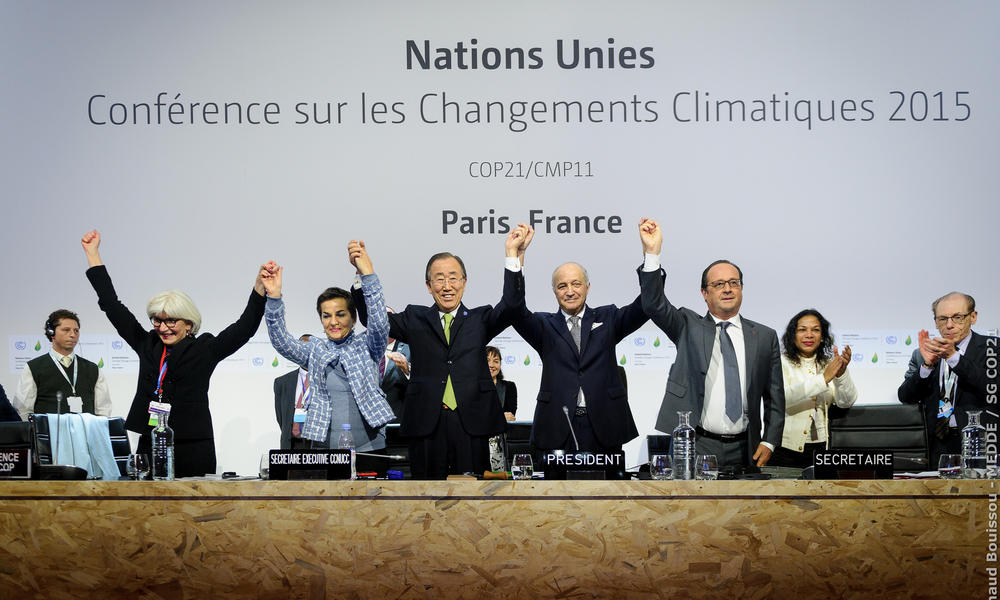
Paris Climate Agreement | Pages | WWF
With the exception of the Montreal Protocol, international law aimed at stopping climate change has been an overwhelming failure. Climate negotiations in Kyoto, Copenhagen, and Paris have all produced superficial agreements which lack the teeth to actually meet their collective goals. In order to produce results, future legislation will require key characteristics.

Incentives for Participation

International law is often hampered by its voluntary nature. Unlike individual states, intergovernmental bodies do not have sovereignty over those beholden to its agreements. Instead, the cooperation of nations with international law is often dependent on its benefits to their international reputation versus its drawbacks in regard to independent goals. According to reputation theory, “international law will have a greater impact on economic matters than on military and security matters”. Therefore, the most effective way to incentivize active participation in climate legislation is by tying cooperation directly to non-participating nations’ economic futures. The Montreal Protocol’s success was largely thanks to this strategy: banning trade of controlled substances between participants and non-participants was a cornerstone of the agreement. Completely voluntary participation lowers the risks for states to abandon the agreement in the future and ensures that large economies and carbon emitters like China and the United States are invested in legislation.

Definitive and Scientific Objectives

A common thread in the past two decades of climate negotiations is a general agreement to limit global temperature. In the 2015 Paris Agreement, signatories agreed “to strengthen the global response to the threat of climate change by keeping a global temperature rise this century well below 2 degrees Celsius above pre-industrial levels”. There are benefits to this target temperature: there is a defined point of success and failure, and it is backed by scientific consensus. Unfortunately, this promotes a single goal for every signatory, and painting each nation with such a broad brush severely limits the legislation’s efficiency. Because past international laws have set overall global goals and left specific national targets to individual governments, free-riding is much more appealing than paying economic costs for actual environmental progress. As one professor of Natural Resource Economics at Columbia University puts it, “The problem is that this is a global goal. Everyone is responsible for meeting it, meaning no country is responsible for meeting it”.

To counter this, international law must include targets for each country based on individual carbon emissions and carbon intensity. Additionally, these national goals must add up to a global success. The Paris Agreement failed to account for the contrast between national commitments and international goals, so even if every country meets its commitments, the Accords will still have failed to meet their stated goal. Well-defined targets and limits assist in both enactment and enforcement of environmental accords.

Engagement of Developing Nations

In terms of developing nations, many developed nations recognize their relative innocence in climate change and seek mainly to prevent them from building dependencies on fossil fuels like developed nations did in the 19th and 20th centuries. These goals require money that developing countries simply do not have. Rising global temperatures disproportionately harm the economies of low-income countries, and in many sub-Saharan African countries, climate change has already reduced their GDP per capita by over 20 percent. In order for green development to be practical, it has to be financed by developed economies.

Developed nations also have a responsibility to help developing nations adapt to the present and permanent consequences of climate change. Lowering carbon emissions cannot undo saltwater intrusion in Bangladesh or bring back Nicaraguan coffee crops. Meaningful climate legislation must include climate justice for developed nations who have contributed less to climate change and suffered more.

The Emerging Role of Non-State Actors

Why Central Banks Need to Step Up on Global Warming – Foreign Policy
Non-profit organizations are motivated by public good, not money, and thus far such organizations have led efforts against climate change outside of federal policy. As intergovernmental inaction becomes a greater threat to lives and livelihoods, self-interest has motivated other actors to carve a place for themselves in environmental progress.

Local Governments

While national actors are the stereotypical purveyors of environmental law, many important facets of climate action start from the ground up. After the United States withdrew from the Paris Climate Accords in 2017, mayors from 446 cities pledged to uphold the commitments their federal government had abandoned. Other examples of subnational climate coalitions include the Under2 Coalition, the United States Climate Alliance, the International Zero Emission Vehicle Alliance, and the Pacific Coast Collaborative. Each of these organizations includes subnational members, and their goals are often more aggressive than agreements produced by national actors. Such agreements have proven especially effective in the United States, where perception of the legitimacy and urgency of climate action can differ by region and municipality.

Corporations

Consumers are providing companies with a growing incentive to go green. In 2014, one study found that 55 percent of global consumers were willing to “products and services from companies that are committed to positive social and environmental impact”. Market incentives for sustainability increase as consumers associate green brands with easy altruism. Take Unilever, for example: their brands which associate themselves with sustainability “are growing 69 percent faster” compared to sales in other areas. As more companies sell products with a limited or reduced environmental footprint, other companies will be forced to adapt to new green norms in order to compete.

Asset Owners

Large investors now include climate change in risk assessments. In the past, ignoring carbon emissions in favor of economic growth powered by fossil fuel made the most fiscal sense. Now, asset owners and their portfolios are starting to feel the effects of climate change. The asset manager BlackRock will now ask every firm in its $7 trillion portfolio to disclose their carbon emissions, and a group of investors known as Climate Action 100+ leverage nearly half of the world’s invested capital to push for reduction of greenhouse gas emissions, carbon neutrality, and environmental disclosure. The private sector does not have the will or the ability to fully combat climate change; however, companies are often more beholden to investors and board members than to politicians.

Conclusion


Global impotence on climate change is no longer economically or politically viable. Developing nations have been struggling with the negative consequences of climate change in relative silence, but as developed nations begin to feel the effects of natural disasters, scarcity conflict, and climate migration more acutely, they will be forced to throw their political power behind substantive climate action. In order to do so, world leaders will need to abandon the false comforts of vague agreements and create international law with compelling incentives for participation, defined and scientific objectives, and appropriate engagement of developing nations. Finally, in failing to act when they had the chance, international governments have given up considerable power to subnational and non-governmental actors who will require a seat at the table to stand a chance against climate change.

What other consequences of climate change will impact the way countries interact? What are some other qualifications of effective international law? Can countries make real progress in fighting climate change, or will the responsibility fall to other groups?

Sources

Websites

https://www.prb.org/environmentalscarcityandtheoutbreakofconflict/

https://foreignpolicy.com/2020/03/14/ethiopia-egypt-gerd-united-states-must-not-pick-sides-in-the-nile-river-dispute/

https://www.worldbank.org/en/news/press-release/2018/03/19/climate-change-could-force-over-140-million-to-migrate-within-countries-by-2050-world-bank-report

https://www.theguardian.com/world/2020/jan/20/climate-refugees-cant-be-returned-home-says-landmark-un-human-rights-ruling

https://unfccc.int/process-and-meetings/the-paris-agreement/the-paris-agreement

https://woods.stanford.edu/news/what-happens-if-we-dont-meet-paris-agreement-goals

http://climatemayors.org/actions/paris-climate-agreement/

https://calepa.ca.gov/intergovernmental-relations-program/

https://www.nielsen.com/us/en/insights/article/2014/it-pays-to-be-green-corporate-social-responsibility-meets-the-bottom-line/

Excerpts from Foreign Affairs, Volume 99 Number 3

“A Foreign Policy for the Climate” by John Podesta and Todd Stern

“The Strategic Case for U.S. Climate Leadership” by James A. Baker III, George P. Shultz, and Ted Halstead

“The Climate Debt” by Mohamed Adow

“The Unlikely Environmentalists” by Rebecca Henderson

Excerpts from Essential Reading in World Politics, 7th Edition

“International Law: A Compliance-Based Theory” by Andrew T. Guzman

“Why Have Climate Negotiations Proved So Disappointing?” by Scott Barrett

Thursday, April 23, 2020

The fight between Fossil Fuels and Clean energy

By Ben Spence


              In recent news, due to COVID-19, oil prices have dropped dramatically to become priced at $-30 a barrel. Yes, that's right, companies are now paying for you to come take the oil off their hands because they can't store it anywhere. With no place left to go, refiners are curtailing output and in danger of shutting down. The more refineries that shut down, but the steeper the drop in crude demand. While the US and other major countries have financial cushions, more developing countries are falling behind and are collapsing. All of this chaos made me think about how we got here in the first place and what we can do next.

              It all started back in the 1800's when new energy resources became aware to the public and many companies began to capitalize and farm on those resources. It wouldn't be until many decades later when the world finally realized what environmental impacts these resources came with. Coal and Oil were among the resources used and quickly began polluting the air, water, and destroying a lot of habitats for species of all kinds. When coal is burned it releases a number of airborne toxins and pollutants. They include mercury, lead, sulfur dioxide, nitrogen oxides, particulates, and various other heavy metal. Oil spills in the water can destroy insulating ability of mammals, poison their drinking water, and destroy the water repelling feathers on birds. 


              Fossil fuels are being used at a rate millions of times faster than the rate at which they were produced, making them nonrenewable for all practical purposes. This is a serious problem because the infrastructure of industrial society is entirely dependent on oil and its derivatives. However, laws passed like the Enactment of Resource Conservation and Recovery Act creates the framework for the management of hazardous waste. The Epa has control of the generation, transportation, treatment, storage, and disposal of hazardous waste.

              With so many new regulations on fossil fuels, people began to look for other ways of cleaner and more reusable energy. Hydropower was the first source people came upon, and then came wind and solar energy with it. These renewable resources allowed us to stay further away from the need of oil or coal. In addition, many advantages come with renewable energy such as that it won't run out, numerous environmental benefits, lower reliance on foreign energy, and maintenance requirements are lower.


Now it all comes down the the advantages and disadvantages of each energy sources. 

Renewable advantages: 
  1. Doesn't run out
  2. Numerous environmental health benefits
  3. Lower reliance on foreign energy
  4. maintenance requirements are lower
Renewable Disadvantages
  1. Higher upfront cost
  2. low storage capabilities
  3. geogrpahic limitations
  4. Intermittency 

Non-renewable Advantages
  1. abundant (for now)
  2. affordable
  3. easier to use
  4. produce more power

Non-renewable Disadvantages
  1. can't be revitalized or replaced
  2. harmful to wildlife and habitats
  3. dangerous and cause respiratory problems to humans
  4. pollution from sources destroys ozone layer
              From seeing all of these advantages and disadvantages, what do you think the better option will be? why? How do you think we can sway consumers and companies over to more clean energy sources? What will happen when we run out of fossil fuels? 


Tuesday, April 21, 2020

Animal Testing

The Ugly Truth of Looking Pretty
Selena Sheth


Did you know that in several parts of the globe, animals are suffering confined in labs by testing products such as shampoo and eye shadow? The cosmetic products we use every day seem pretty harmless; however, it is anything but that to our furry friends. The chemicals are forced onto their skin, affecting more than 100,000 animals. These beauty companies go through some extremely ugly processes to make people feel pretty wearing their products.


Typically, animal exams for cosmetics encompass skin and eye irritation tests wherein chemical substances are rubbed onto the shaved skin or dripped into the eyes of rabbits; repeated oral force-feeding research lasting weeks or months to search for signs of standard illness or particular health dangers, consisting of most cancers or start defects; and even broadly condemned “deadly dose” assessments, in which animals are forced to swallow massive quantities of a check chemical to decide the dose that reasons loss of life. These exams can cause great pain and distress consisting of blindness, swollen eyes, sore bleeding pores and skin, internal bleeding and organ harm, birth defects, convulsions and death. The animals are not given pain relief and at the end of the test animals will likely be killed, commonly with the aid of asphyxiation, neck-breaking or decapitation.


There are also detrimental environmental impacts that stem from animal testing, Typically, facilities that engage in in this not only dispose of animals, but also dispose of potentially dangerous chemicals, food waste, and a variety of supplies used during the testing process. Additionally, animal testing also heavily impacts water and air quality. According to the National Institutes of Health (NIH), “waste from their animal testing facilities totaled 1.5 million pounds from 2011 to 2013.” This use of chemicals and supplies contribute not only to pollution but to adverse effects on biodiversity.


In a huge win for animals, the European Union (EU), Israel, and India have prohibited the purchase of any cosmetics or cosmetic ingredients that have been tested on animals. These marketing bans mean that large companies all around the globe will have to discontinue animal testing for cosmetics if they want to sell in these extensive markets. Unfortunately, there’s no ban on testing cosmetics or household products on animals in the U.S., so companies that produce and sell their products here can continue to conduct experiments on animals. So, what can we do, as Americans, to limit animal cruelty? What are different alternative forms of testing? What are some other environmental effects of animal testing?


https://faunalytics.org/animal-research-an-environmental-perspective/https://www.humanesociety.org/resources/cosmetics-testing-faqhttps://jaishroff.wordpress.com/2016/11/15/the-significant-impact-of-animal-testing-on-the-environment/https://shop.vita.world/blogs/news/the-truth-about-animal-cruelty-in-the-beauty-industry

Thursday, April 16, 2020

Fashion Forward Thinking

Audrey Risberg

The fashion industry is often looked at as a whole as being wasteful and environmentally damaging. People take note of the high consumption and constant waste of materials due to designers viewing them as “out of style.” In their attempt to produce clothing that is cost efficient, companies end up filling landfills and harming the environment with the fabric fibers they use. But do all companies give little consideration to the environment? Does anybody make environmentally friendly manufacturing choices?


The eco-fashion industry is slowly getting recognition for environmentally conscious decisions. Designers from all over the world have started finding ways to reuse different materials. Adidas has created shoes entirely made from reclaimed and recycled yarns and filaments, from ocean waste, and from deep-sea gillnets. Other companies, like Patagonia, H&M, and Rothy’s, are creating clothes with cork, recycled polyester, organic cotton, natural fibers, and many other resources. 

Adidas Shoes Made From Recovered Ocean Plastic

Ananas Anam, a Philippines designer, has even discovered how to turn pineapple leaf fiber into an environmentally friendly leather called Piñatex. The material has been used for clothes, bags, shoes, and even seat covers.

Piñatex Leather Jacket

Other companies have found ways to give back to the environment. For example, Amour Vert and Tentree, clothing companies, plants ten trees for each item purchased. Every customer also receives a code that they can use to track the growth of their trees. Pact, Reformation, and H&M are a few companies that also make an effort to reuse old clothing and encourage customers to return old clothing they don’t want for future discounts instead of disposing of it. 
In 2010, a green carpet challenge began among many high class designers and has continued through 2020. The challenge was to create a design entirely eco-friendly to help make a statement about sustainable environment. Through the various celebrity platforms, they are able to promote sustainable fashion and encourage a need for a different approach in designing clothing.

The Green Carpet Challenge

Many designers around the world, whether well known or not, are making great strides in raising global awareness. Through new collections and fashion shows, companies are able to encourage fashion that is mindful of the environment and take grand steps to decrease their ecological footprint. Below are a few companies and designers that have devoted their attention to create clothing that benefits the environment and shares the concern for a sustainable industry. 
The fashion industry is huge. Many people around the world are tangled within the fast moving, reckless, consumption rate of clothes. But, companies and designers everywhere are standing up for what they believe in. The need for change. The need to take care of our environment.
What other consumer industry do you feel needs to become more eco-friendly? How can people be aware of the eco-fashion industry? What other materials could designers use that wouldn’t harm the environment?


H&M 
- Released a new collection made of materials like organic cotton and recycled polyester
- Hopes to reduce its environmental footprint by using eco-friendly fabrics and more sustainable production methods
- Customers can recycle unwanted garments back to H&M and receive a discount for future purchases
- Has a goal to use only sustainably sourced materials by 2030

Levi’s 
- Denim usually requires a huge amount of water to create one pair of jeans, but recently, they released a collection that uses up to 96% less water
- Working towards 100% sustainable sourced cotton as well as recycling old jeans into home insulation

Rothy’s 
- Created shoes made from 100% recycled plastic water bottles and post-consumer recycled materials (which are products that have reached the end of its use for a consumer)

Tentree 
- For each item purchased, 10 trees are planted
- Each customer receives a code so they can track the growth of their tree
- Plan to plant one billion trees by 2030
- Clothing is made from ethically sourced and sustainable materials including cork, coconut and recycled polyester

Everlane 
- Recently released a line of clothing from recycled plastic bottles and other reused materials
- All profits from their collection, 100% human, are going to Feeding America’s COVID-19 Response Fund

Patagonia
- Uses sustainable materials
- Helps customers repair their clothing instead of buying new ones
- Has a goal to find solutions to environmental issues without causing unnecessary harm to the world

Amour Vert 
- Creates sustainably sourced garments in smaller batches to avoid the waste of unsold items
- Uses non-toxic dyes and the most sustainable fabrics
- Plants a tree for every item purchased
- Follows a zero-waste policy and recycles and reuses items

People Tree 
- One of the first sustainable fashion brands
- Uses sustainable materials like organic cotton, natural fibers, and chemical free dyes

Great Beyond 
- Australian company that uses fast growing bamboo to create soft, durable basics
- Clothing made from 100% organic woven bamboo

Reformation 
- Each item comes with a description and score of its environmental footprint to help customers understand the impact of clothing
- Uses upcycled and sustainable materials
- Has been carbon neutral since 2015
- Helps protect deforested areas to offset its manufacturing
- Customers can sell their old clothing back to earn credit for new pieces

Ananas Anam 
- Philippians designer who is turning pineapple leaf fiber into an environmentally friendly leather called Piñatex
- The process does not require additional land, water, pesticides, or fertilizer beyond what's already being used to grow the pineapple

Rosalie McMillian 
- UK designer that creates high-end jewelry from derived coffee grounds
- Uses sustainable, non-toxic or recycled materials and practices


https://www.fibre2fashion.com/industry-article/6888/is-the-global-fashion-industry-going-green
https://www.groundworkpresents.com/cleaning-fashion-industry/

https://www.forbes.com/sites/solitairetownsend/2018/11/21/consumers-want-you-to-help-them
sustainability/#4492127b6dba

Tuesday, April 14, 2020

The Dangers of Smog

Vivek Reddy


Smog is air pollution which reduces visibility. During the early 1900's the word smog was first used to describe a combination of smoke and fog. Most of the smog we see today though is photochemical smog. Photochemical smog is formed when nitrogen oxides and at least one volatile organic compound (VOC) in the atmosphere react to the sunlight. While nitrogen oxides come from car exhaust, coal power plants, and factory emissions, VOCs are released from gasoline, paints, and many cleaning solvents. When sunlight comes into contact with these, they form a ground-level ozone which is also known as smog.
Due to the ozone layer, the layer of molecules in the upper atmosphere that protects us from harmful UV radiation, many people equate the word ozone as "good". While the ozone layer is extremely beneficial for us, ground-level ozone, or smog by no means a good thing. Smog is a noxious pollutant. Ozone is a highly reactive substance which makes it dangerous to breathe. Inhaled ozone reacts to the organic compounds which make up your respiratory system's tissue lining. The damage can be likened to a sunburn.

Short-term ozone exposure can cause chest pain, coughing, shortness of breath, and irritation of the throat for healthy individuals, but it is fairly mild and most likely can be reversed. Nevertheless, prolonged and frequent exposure can permanently scar lung tissue. In other people, the health consequences may be much more severe. There is no need for long term exposure to experience the impact of ozone. There is strong and convincing evidence that correlates short-term ozone exposure with respiratory health effects, according to the EPA. Ozone takes people out of school and work and places them in the hospital. Short term exposure to ozone in children with asthma is strongly correlated with increased use of asthma medicine.
Several nations, including the US, have developed smog control regulations. Many laws have limits on what chemicals a factory may release into the environment, or when they may be released by the factory. Cities such as Mumbai, Bangalore and Helsinki are investing more in public transport. These limits on chemicals released into the air decrease smog content.

While there are places working towards eliminating smog and air pollution altogether, there are still places with large amounts of smog still remaining. Places like California, China, Japan, Brazil, and Qatar still have a long way to go in their journey to eliminate their smog. What do you think these countries and cities could do to help eliminate the smog?  What do you think you can do as an individual? 

Tuesday, April 7, 2020

The Effects of Coral Bleaching

The Effects of Coral Bleaching
Jason Perez

This is not the first time that the topic of the Great Barrier Reef bleaching has been brought up. However, this time it is different. It is more widespread. The bleaching has gone across the whole coast of the reef. For the first time, the Great Barrier Reef has been struck by bleaching in all three of its regions. This is cause for concern as this not only affects the wildlife, but also humans. This event has brought attention to what is really important. Coral bleaching is a symptom of climate change.


Coral bleaching occurs when water temperatures rise and the coral turn white as a stress response. The way that coral obtain their vibrant colors is with a symbiotic relationship with algae. However, whenever the coral gets too hot, they expel the algae as a stress response. As the algae leaves, the coral fades until it looks bleached. However, if the temperature does not lower, the coral will not let the algae back. This then causes coral to die.

This is cause for concern because it is not happening in just one place. It is global and can affect the ecosystem, which can then have a domino affect on humans. Coral is the very foundation for marine ecosystems and if that is wiped out, then everything else goes with it. Coral reefs can also act as natural barriers that absorb the force of waves. However, if that is taken away, humans will have to use seawalls that are environmentally invasive and less effective.


I chose this topic because I care deeply about the environment and the habitats of animals. It just enrages me whenever I hear about this type of news because I know it is our fault, as a population. There is not much I can do to help it and it is not like I can live a primitive lifestyle in today’s society. The only thing we can do I believe is to raise awareness to make change. This is one of the effects of climate change, and if nothing is done to stop it at its source then more problems will arise.

This catastrophe raises some prevalent questions. What can we as a society do to help lessen the impact? What about as individuals? Do you believe that there may be other factors that contribute to this?

Sources:

Thursday, April 2, 2020

The Harsh Effect of Ships in the Arctic By: Kiran Paul

In the 1950s, tourism in the Antarctic was used to display high status because of the cost of going there. As cruise technology advanced in the 80s and 90s, expeditions grew in frequency and capacity. From 6,700 passengers in 1993 to 56,000 in 2019, arctic cruises have boomed in popularity. However, the problem arises when management comes from a group of cruise line competitors; this causes the primary focus to shift from environmental safety to revenue generation. The International Association of Antarctica Tour Operations (IAATO) claims that it has been exceptionally successful in promoting sustainable travel. They believe that the education and exposure of the arctic will outweigh the environmental impact caused by the numerous ships cruising the surrounding Antarctic and ecosystems. 

     In 2007, a Liberian cruise ship, MS Explorer, crashed into submerged ice, and 100 passengers were forced into lifeboats and onto another cruise liner. The MS Explorer was carrying over 55,000 gallons of oil and petrol; after two days the spill covered nearly two square miles of ocean. While International Maritime Organizations have placed fuel regulations and limits, as the number of ships cruising the Antarctic increases the so does the risk of accidents. Ships also carried invasive species that cling to the hulls of these liners and enter new ecosystems. This along with human activity has disturbed the population of penguins and other native species.  

I
Not only people but noise pollution from the ships are causing detrimental effects to native populations. Noise pollution can cause temporary hearing loss, increase in stress hormones, and lead to death in certain ocean organisms. Increased ship traffic has caused key species, like Arctic Cod, to move from their original habitats to an area with less noise. A single ship could move a cod almost 400 meters away from their initial habitat. This means that ships have caused new behaviors to emerge in species; the Arctic Cod spends less time finding food and more time traveling to get away from the ships. In the past twenty years, ship traffic has doubled and many artic organisms have not had time to adjust to this new stimulus. While the IAATO may have been successful in self-regulating themselves in the early years, the growing numbers of tourists have made it an inefficient system.  

     Light pollution from ships is also causing problems for photosynthesizing animals. Artificial light is blocking natural light from reaching these organisms, from the surface to 200 meters below. Fish that rely on changes in natural light in Arctic waters are being effected in both sleep and mating cycles. It also allows predators to gain an advantage over their prey as it is easier for them to see and capture them. There is a six percent increase in artificial light that could be affecting habitats and ecosystems under the sea. As Arctic tourism becomes more mainstream and more accessible, the need for a stronger body to govern the cruise line operations grows. A self-regulatory system is no longer a viable option and the need for more environmental protection of the Arctic must be made a priority. As a society, and custodians of the future, we need to ask some difficult questions. What would you do to make arctic tourism a more environmentally friendly option? How does arctic tourism make you feel? How can cruise passengers help the environment? 


Sources - 


The Ten Plagues Pt. 2?

The Ten Plagues Part 2? By: Matthew Wang Who are they? Amidst all of this Coronavirus quarantine, it seems like the world is...