Saturday, May 16, 2020

The Ten Plagues Pt. 2?

Invasive giant hornets have been spotted in the US for the first ...
The Ten Plagues Part 2?
By: Matthew Wang


Who are they?


Amidst all of this Coronavirus quarantine, it seems like the world is coming to an end. Although the Coronavirus has been ravaging our society, it looks like we have another problem on our hands. Murder Hornets have arrived from Asia.(Why does everything bad now have to be Asian?). "Murder Hornets" are the Asian Giant Hornets which originate from Japan, These hornets are about two inches in length and have a 3 inch wingspan. These hornets have been spotted around the mountainous areas around Washington State.

What's the problem?
These Asian Giant Hornets are known for being very protective of their nests. One report of these hornets have described them as ripping off the heads of the bees. These hornets kill local bees preventing them to pollinate the local plants in turn hurting the entire ecosystem. What makes this even worse is that this species is a particularly invasive version of hornets that specifically target sugar-intensive items such as honey. That's why they target honey so much.

Can they really kill humans?
These hornets are able to kill humans. However it'll take hundreds of these hornets to successfully poison a human. Although this may be the case, a single hornet is still able to kill a single human through anaphylactic reactions. Anaphylactic reaction is where the human immune system release chemicals which will cause you to go into shock, lower blood pressure, and narrow airways. On average in Japan, there have been 30-50 deaths per year.

How do they effect the ecosystem?
These hornets are an invasive species which means that they are threat to the entire ecosystem in general. They specifically target a single species to take out which in this case in the are the bees. According to Washington(where they have been found) state officials, they have begun to take actions to prevent the Giant Asian Hornets from taking root in their ecosystem and try to return the ecosystem back to homeostasis.

Sources
https://www.nytimes.com/2020/05/02/us/asian-giant-hornet-washington.html?auth=link-dismiss-google1tap
https://www.ecowatch.com/what-are-asian-giant-hornets-and-are-they-really-dangerous-5-questions-answered-2645996692.html?rebelltitem=8#rebelltitem8
https://www.nationalgeographic.com/animals/2020/05/why-asian-giant-hornets-have-painful-stings/#close
https://www.mayoclinic.org/diseases-conditions/anaphylaxis/symptoms-causes/syc-20351468


x
x

Friday, May 8, 2020

Environmental Racism

by: Chaewon Yoon

Environmental Racism - Food Empowerment Project
       Racism has been a problem since the past, as certain people believed that they were superior to others, not treating them equally. Eventually, as time went on, there have been laws and policies that prevented some of the unfairness and negativity. However, racism still goes on in society, and environmental racism is one of the specific kinds of racism. Environmental racism refers to the discrimination within where people live, especially within the minority and lower-income communities. Poorer people tend to live in areas that are in worse conditions, like near polluting factories, than the places the wealthy live in because the land is cheaper and more affordable. Although it is true that income levels have an effect, the biggest factor is race. There are certain policies that have negative impacts on these specific people. Environmental racism is real, even the Environmental Protection Agency (EPA) has confirmed it.

Environmental Racism — climate curriculum

       The problem is in the different point of view of people. Environmentalists tend to focus on preserving the environment like national parks and monuments, where people don’t live and only visit sometimes for vacations. Because of this, they fail to pay attention to the conditions of where people actually live, resulting in poor living conditions for those who can’t afford good places, like minorities and low-income residents. People living in poverty are more exposed to fine particulate matter, which is both natural and man-made solid and liquid particulates that is released into the air and causes a variety of health problems, like lung disease, heart attack, and even death. In an article called Environmental Health Perspectives, there was a claim that these problems were related to racial segregation, as data showed that people of color were more exposed to polluted environments that cause poor health conditions.

Rev. Ben Chavis, right, raises his fist as fellow protesters are taken to jail at the Warren County PCB landfill near Afton, North Carolina on Thursday, Sept. 16, 1982.

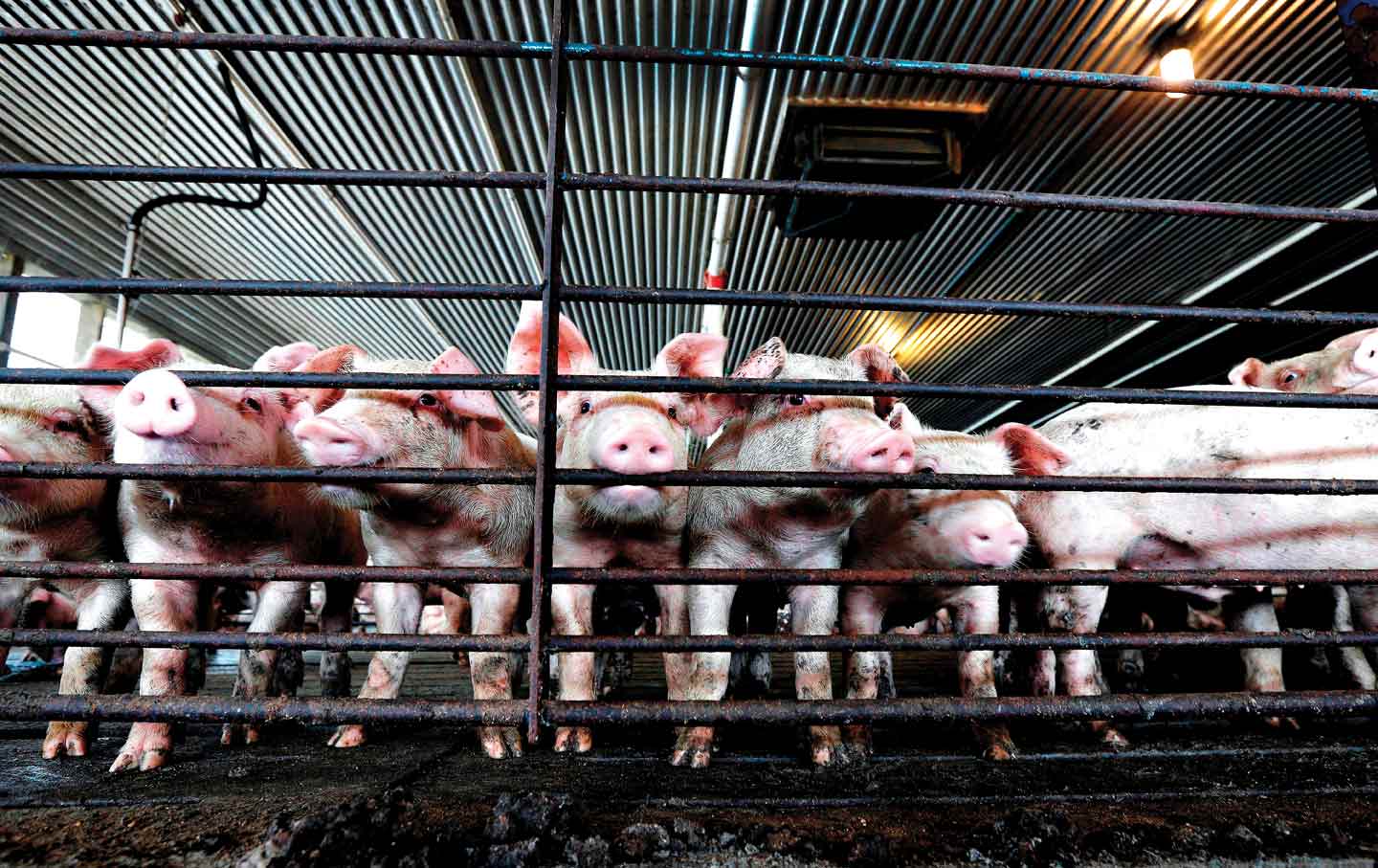
       There have been protests among the minority groups since the past over these unfair regulations. In 1982 in Cheraw, South Carolina, Rev. Ben Chavis and a group of people protested, demanding that no more PCB was dumped in a landfill near their town because it was causing cancer due to the pollution that are resulted. Moreover, most people think that the polluters are just smoke-producing factories and industries, but in reality, there are lots of other places that create a great amount of harm. One of the places is actually the food industry, like factory farms and slaughterhouses. Among these, one of the biggest contributors are industrial pig farms, as they pollute the air and the water due to the large amounts of manure lagoon they produce and release into the environment. Also, in North Carolina, the fact that the number of pigs in the factories outnumber the number of residents in the area tells a lot.

The Stink and Injustice of Life Next to an Industrial Hog Farm ...

       Of this problem, the biggest problem is that it is not widely known, so the first step would be to spread the knowledge. If all of the research is confirmed and published into a well-known public health journal, then awareness about environmental racism would spread, allowing people to focus on this problem, in order to come up with further solutions. Also, if people think in different perspectives, solutions will be easier to find. For example, environmental justice activists believe that the environment is where people actually live and work, not the nature where there is no human activity. Lastly, one of the solutions that are already in play being carried out by the EPA. It has ordered several institutions already that cause lots of pollution to dismantle.

       As I researched about environmental racism, I learned a lot about the world, and how it is ironic at times. There are lots of programs and services done by the society in order to help those in need, but I feel like the starting place is a little off. If the living conditions of the minority and low-income residents are improved, then their health conditions will naturally improve, resulting in less people in hospitals and in need of more help.

       What do think about environmental racism?
       What do you think is the first step toward the solution to these problems?
       What do you consider “the environment”? (Nature or where people live?)

       Work Cited

Friday, May 1, 2020

The Sixth Mass Extinction

by Julia Vasconcellos

INTRODUCTION
Over the last century, an absolute minimum of 477 vertebrate species have gone extinct. This may not seem like a huge number; however, scientists estimate that without anthropogenic influence, these species would have taken nearly a millennium or longer to disappear. The difference between these numbers clearly convey an issue in the health of our planet, and scientists are sweeping the globe and racking their brains to find solutions.

THE SIXTH MASS EXTINCTION
In the history of the Earth, there are five definite occurences of mass extinctions, classified as the loss of seventy five percent of the planet’s species in less than 2.8 million years, a “short” geographic period. The last of these definite extinctions happened in the Cretaceous period, when the dinosaurs died and made way for the evolution of humans. However, many scientists agree that the planet is currently undergoing a sixth mass extinction orchestrated by humankind.

Infographic: Charting the world's sixth mass extinction

To classify a human-caused mass extinction, scientists must determine whether the loss of biodiversity is exceedingly faster than estimates made for a world without the influence of humans. A tool to achieve this is called the background rate, which experts use to estimate rates of extinction naturally. One study, using very conservative estimates, determined that the current rate of extinction is at least ten times higher than the background rate, with other studies claiming the rate is up to ten thousand times higher. Either way, the exceptionally high rates of extinction across the last few centuries undeniably support the claim that the planet is undergoing a sixth mass extinction.

WHAT IS CAUSING THESE EXTINCTIONS?
Human activity is the driving factor behind this rapidly increasing extinction rate. More specifically, loss of habitat, climate change and pollution are some of the main issues contributing to loss of species. Construction of cities and ever-expanding suburban sprawl takes up land that previously belonged to animals, chasing them out of their territories and often into unforgiving concrete jungles. Pollution, both gradual and sudden, can poison previously healthy species in an area; the Deepwater Horizon oil spill alone affected 600 species, with scientists predicting harmful effects on those species’ populations for generations. Finally, climate change is warping habitats and making them unlivable for certain species, with one notable example being the decreasing polar bear populations in the arctic due to melting ice. These issues and more are threats to biodiversity and actively causing extinctions every year.


SOLUTIONS
Policymakers, industries, and scientists have pored over this question and are still considering methods to slow the current loss of biodiversity. Some ideas include converting working land into wildlife sanctuaries with the cooperation of local farmers, reforming fisheries, and reducing methane pollution, which is a major force behind the rapidly changing climate. While good in principle, more commitment to saving species is necessary to truly make an impact. Scientists across a myriad of studies agree that unless huge conservation efforts are placed into effect, and soon, decaying biodiversity may not be able to be slowed or reverted.

What are some other methods industries could implement to help reduce the extinction rate? How can the average person help to reduce the loss of biodiversity? Who do you think is the most important force behind motivating conservation efforts?

Sources:

https://theconversation.com/what-is-a-mass-extinction-and-are-we-in-one-now-122535
https://www.edf.org/blog/2019/05/22/humans-are-causing-1-million-species-go-extinct-here-are-3-ways-still-save-them
https://advances.sciencemag.org/content/1/5/e1400253
https://www.theguardian.com/us-news/2019/jan/02/florida-panther-extinction-collier-county-development-project
https://www.mnn.com/earth-matters/animals/photos/10-animals-at-risk-of-extinction-from-the-gulf-oil-spill/threat-of-exti
https://www.worldwildlife.org/pages/polar-bears-and-climate-change


The Ten Plagues Pt. 2?

The Ten Plagues Part 2? By: Matthew Wang Who are they? Amidst all of this Coronavirus quarantine, it seems like the world is...